Amalie Piil Tarding
Game Developer
Project resume:
Mouse & Crane is a puzzle-based 2D platformer adventure game adapted for young audiences (aged 4-7). It offers creative problem-solving and teachable moments through upcycling, recycling, and construction with cute characters through a hand-drawn collage aesthetic. The Switch version contains 4 single player game episodes and 3 co-op episodes.
The game is available on the Nintendo Switch Store. (Published 2024)
Involvement:
Role: Programmer & Game Design
Responsibilities: The mouse & crane projects consists of the main game (released 2024 for Nintendo Switch) and then a spin-off puzzle game (Unpublished). I joined the main game late in the development where most features were already completed. For the main game my responsibility consisted of menu design and setup and bugfixing various issues. In the spin-off game (unpublished) I worked on all four mini games as well as the menu. I also worked on short animated videos for the same game. Those were made in Unity using Timeline.
Menu Setup
The menu needed to include language select, controls, credits and [O]. I had the responsibility to design and implement the menu. The icons had to be descriptive but also match the design of the game. I went through iterations with titles, icons and title and icons. I decided with the rest of the team that both text and icons worked best.

Mouse’s Toolbox (Unpublished Spin-off game)
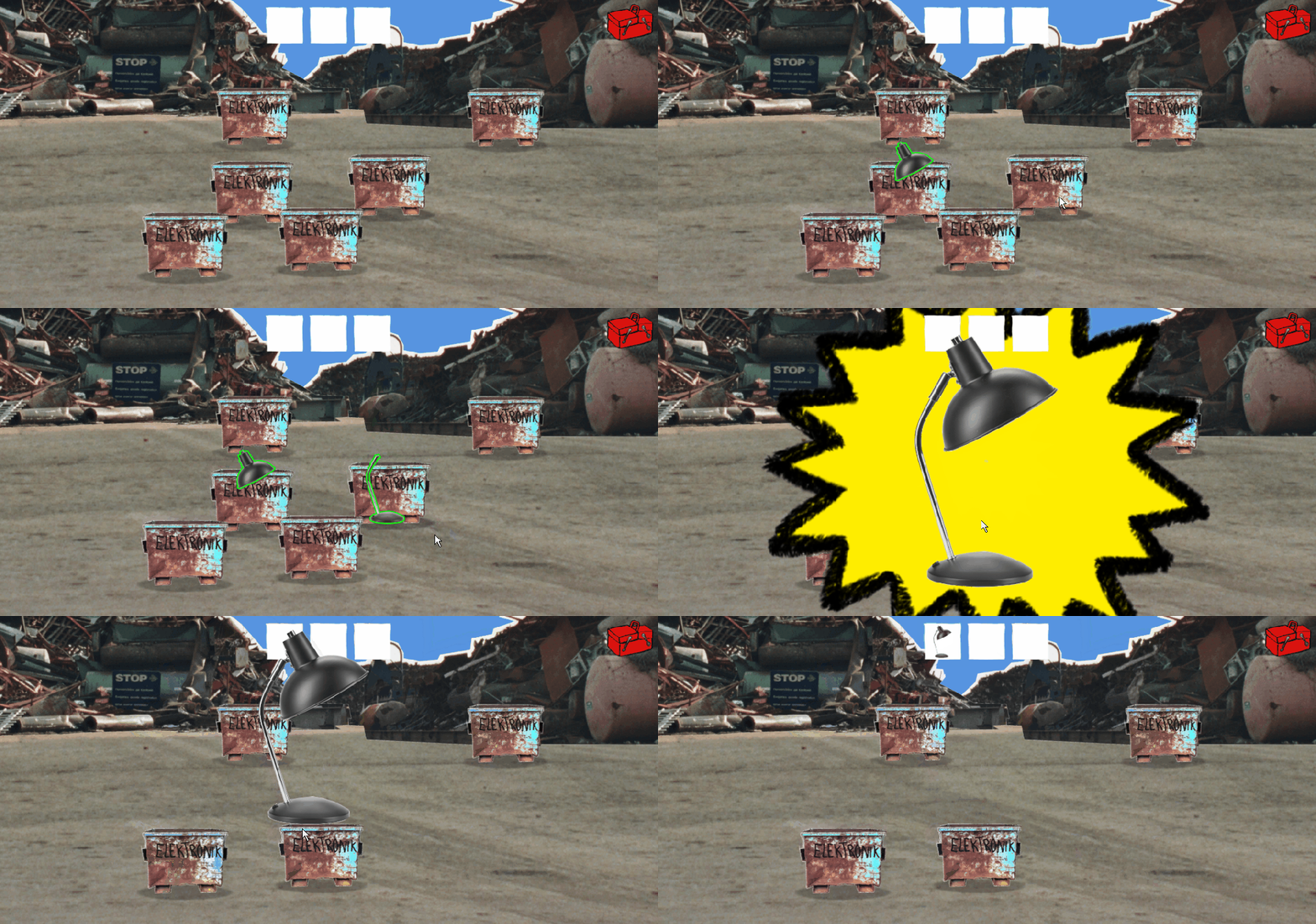
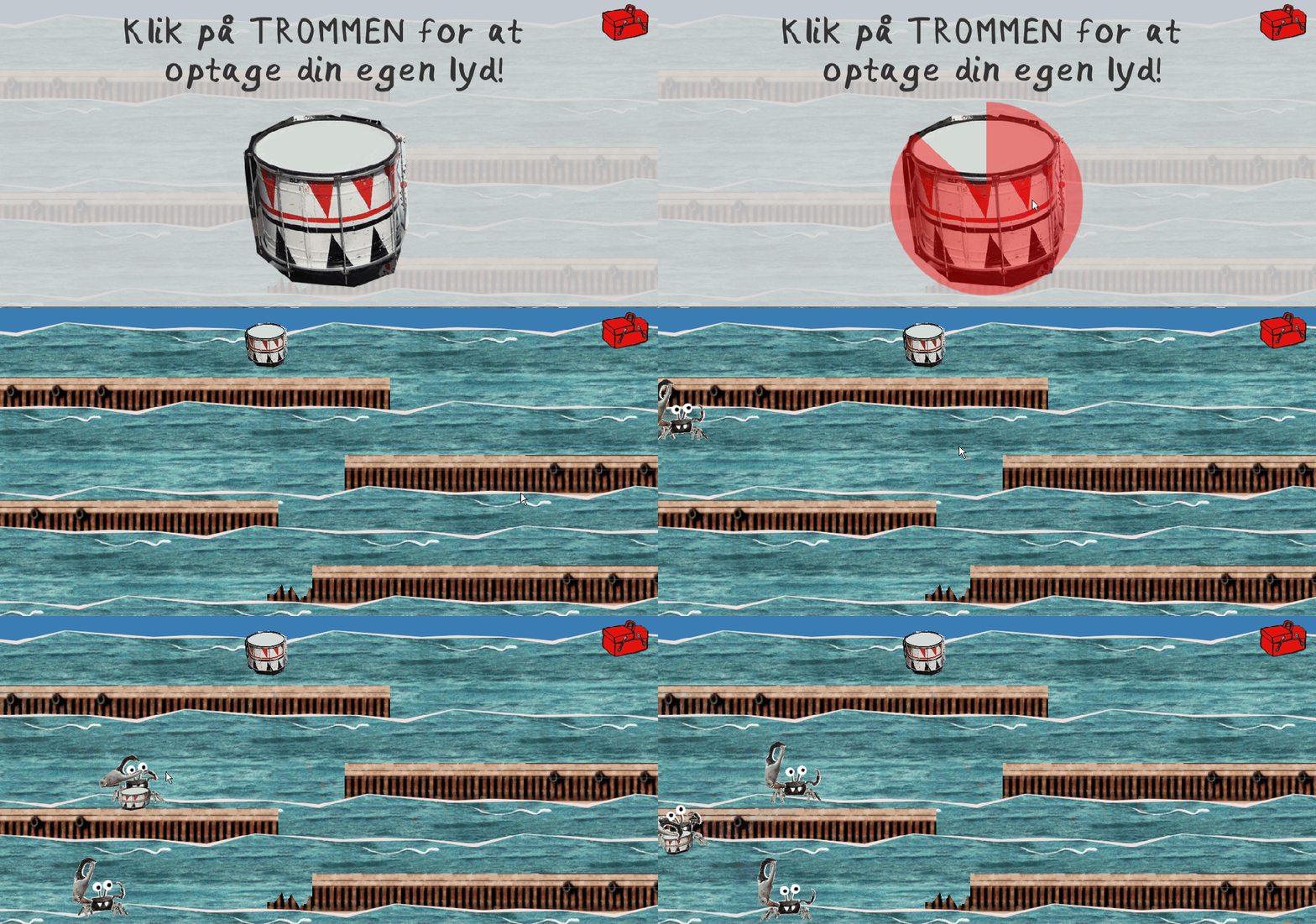
On the sideline of developing Mouse & Crane the spin-off game Mouse’s Toolbox in development. The game consists of four mini games. I mainly worked on two of the four minigames. First mini game is classic memory game where you collect items from the harbor. When you found all items you move on the the pier where you decorate a tin can with the items you found. Fairy lights were attached the the house and to make them glow you had to make a windmill turn by blowing at the microphone. I setup the grid view and the attachment points on the house. It had various challenges as some children would blow very light on the screen, failing to make the windmill turn but if we turned the sensitivity up other sounds in the room would also affect the windmill, I looked into detecting the wavelength of the sounds to sort blown air from other sounds but I did not have the time to implement it. Second mini game was a game where you would record a sound and then assign the sound to an instrument. You would then hand the instrument to a crab to avoid them destroying the pier. The instrument would then loop the sound making a little melody. I worked on the recording of the sound as well as the interface from where you record the sound.
 Amalie Piil Tarding