Amalie Piil Tarding
Game Developer
The Turing Test: VR Experience
Project resume:
For my Master’s project I developed a VR application in Unity. The application was intended to teach students history with the use of virtual reality in particular the history of Alan Turing and the Turing test. The project is a comparative project, which compares traditional history teaching with teaching with virtual reality. The application consists of five rooms each with their own theme and knowledge about Alan Turing, The Turing test and AI imitation of real humans’ work. The project was developed for my MSc in 2017.
Involvement:
Role: Programmer, Writer, Designer
Responsibilities: I had the idea for a VR application as my final project of my MSc project. I chose the topic of Alan Turing and the Turing Test as the leading story in my game. After researching my topic I started the development in Unity. I used a steam plugin to develop the project for the HTC VIVE. I spent 3 months from start to finish on the project; setting up the scenes and programming the functionality plus recording audio and testing with groups of people.
First Room: VR Tutorial
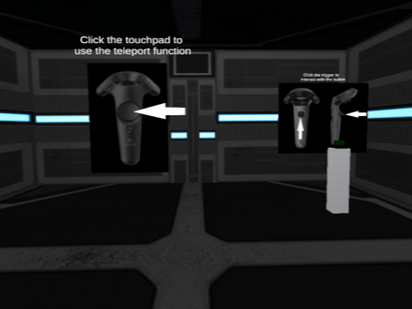
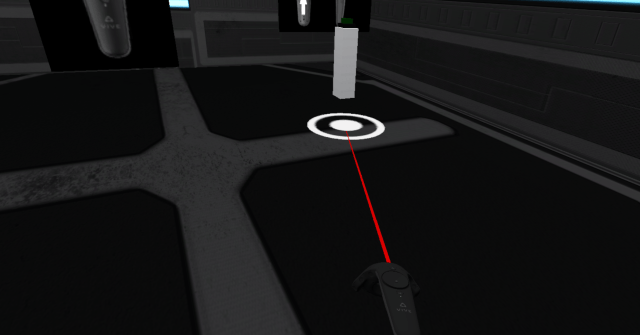
In this first room two images were placed in the middle of the room explaining the controls of the HTC Vive and a button to press. The application was to be tested on people who may or may not have used a VR headset before. When the player had used the teleportation function and clicked the button with the controller a door to the next room would open. This door was a 3D objects which would slide to the slide when the button was clicked.
Second Room: History of Alan Turing
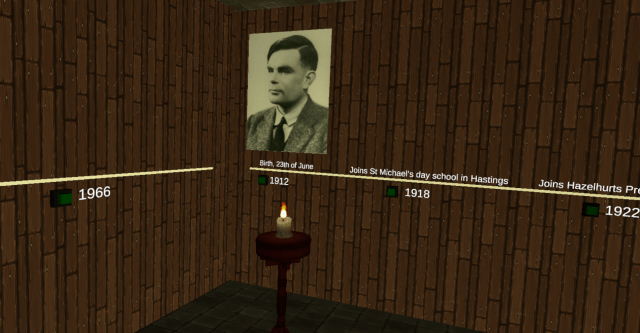
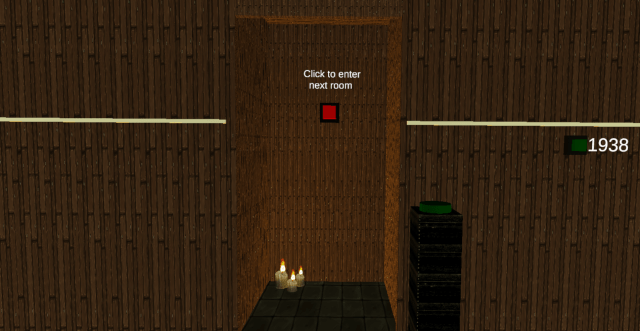
The second room had a timeline along the walls. Below the timeline was buttons with a year written next to it. The years symbolized important events in Alan Turing’s life and when pressing the button, a short line of text would appear above the timeline and an audio file would play.and play. explaining the event in more detail.
Third Room: History of The Turing Test
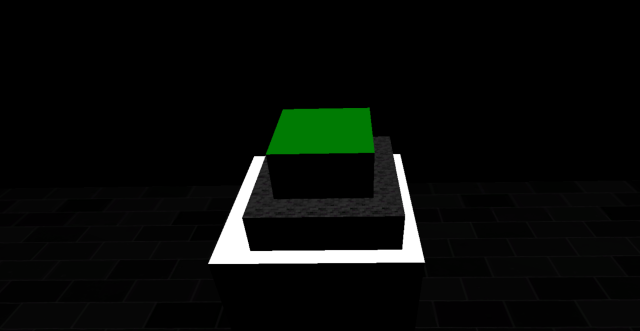
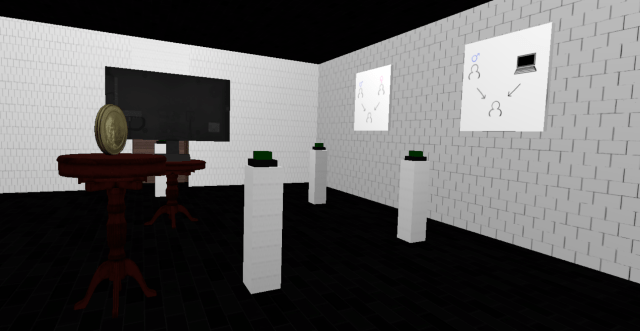
When entering this room only a button placed on a pedestal would be illuminated. Once pressed a spotlight would turn on, on a nearby image and an audio file with information about the Turing test would play.When entering this room the player would be in complete darkness except for one button placed on a pedestal which would be illuminated. Only one button would be lit up. When the user pressed the button a screen on the wall would be lit up and an audio would play explaining what the user was seeing and a new button would light up. Clicking this button would light up a picture and another audio would play explaining what was on the picture. This room would explain the Turing test and when all buttons had been pressed the room would light up to show all the buttons and items that had been explained giving the user free reigns to rehear the audio and look at the different objects in the room.
Fourth Room: The AI Art Gallery
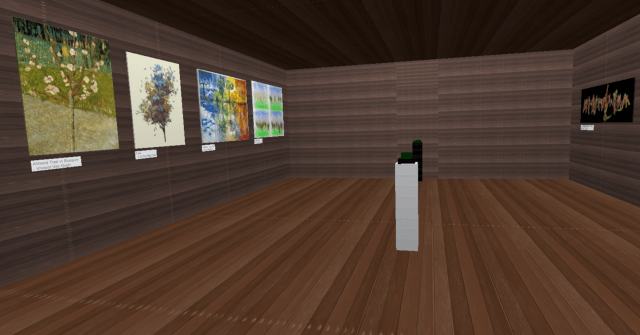
The fourth room was a gallery displaying images painted by famous painters versus images painted by AI.
Fifth Room: The Turing Test
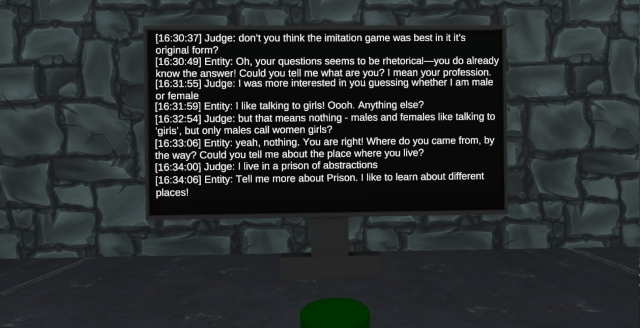
The fifth and last room had three computer screens displaying transcripts from a Turing test competition. One of the conversations was with an AI and a human and the two remaining was conversations between two humans. The player was then to guess which of the conversation was a computer. The answer was given by clicking a button in front of one of the screens. Once clicked an Exit door would appear in either red or green to reveal if the answer was correct. This was the end of the application.

 Amalie Piil Tarding